
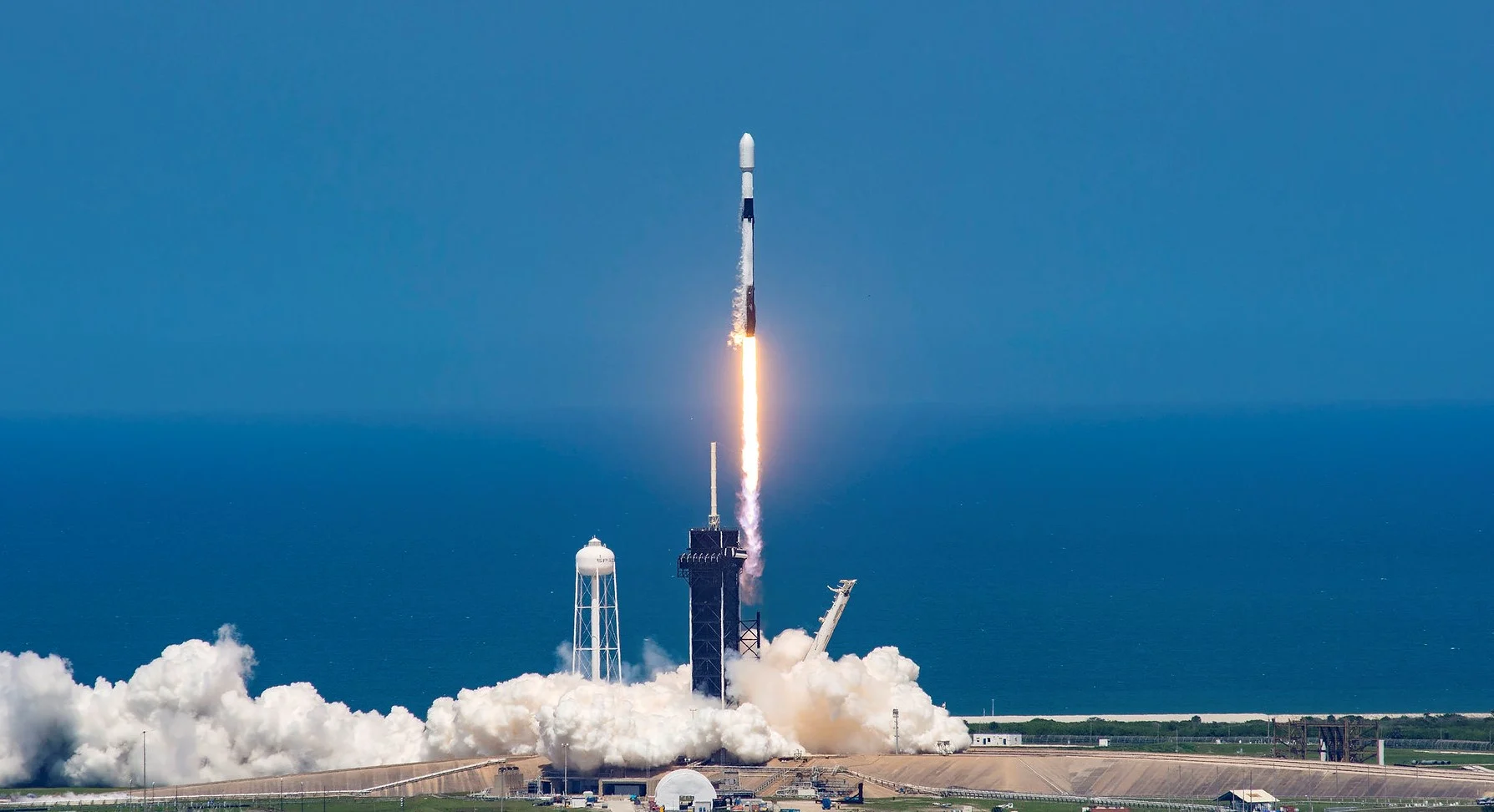
On January 19, 2025, SpaceX launched a Falcon 9 carrying two commercial lunar landers: Hakuto‑R Mission 2 by Japan’s ispace and Blue Ghost Mission 1 by Firefly Aerospace. The shared launch marked a significant step forward in commercial lunar delivery under NASA’s Artemis program.
The mission lifted off from Cape Canaveral and successfully deployed both landers into trans-lunar injection trajectories. Blue Ghost, part of NASA’s CLPS (Commercial Lunar Payload Services), carried over a dozen payloads including scientific instruments, navigation tech, and power systems aimed at supporting future lunar exploration. Hakuto‑R was focused on delivering a small rover, payload tech demonstrations, and camera systems.
This launch was especially symbolic, bringing together Japanese and American commercial efforts on a single Falcon 9 and demonstrating NASA’s growing reliance on the private sector to deliver hardware to the Moon.
While Blue Ghost is targeting a landing in the Mare Crisium region, ispace’s Hakuto‑R is aiming for a site near the Moon’s equator. Both missions plan to operate for about 10–14 days on the surface, gathering data and testing systems in advance of future Artemis crewed missions.
The collaboration between Firefly and ispace shows how lunar access is becoming increasingly diversified. These aren’t flagship government landers; they’re compact, lower-cost, and purpose-built for near-term scientific returns. Firefly’s Blue Ghost lander is also carrying critical tech demos like lunar night survival systems and dust-tolerant solar panels, which could play a role in long-term operations.
Hakuto‑R Mission 1 failed to land successfully in 2023, so this second attempt is an opportunity for ispace to re-establish credibility and showcase progress. The success of the launch and trajectory insertion already puts them ahead of their previous effort.
With Artemis goals picking up and NASA aiming to build permanent lunar infrastructure, missions like these prove the value of fast-moving, commercial lander programs that can reduce cost, shorten development cycles, and drive innovation through competition.
Both landers are scheduled to attempt their descents in mid-February. If successful, it will mark one of the most significant multi-lander missions in recent years, showing that the Moon is no longer the exclusive domain of national space agencies.