
Vast, the commercial space station company based in Long Beach, California, announced on 23 September 2026 that it has created a new Lunar Programs division intended to apply hardware and manufacturing experience from its orbital station work to NASA’s plans for a permanent lunar base. The division will be led by Colin Smith, a founding member of Vast’s team who previously ran the company’s Haven 1 space station program, and is meant to position Vast as a supplier for the agency’s Moon Base initiative rather than to build a full lunar mission on its own.
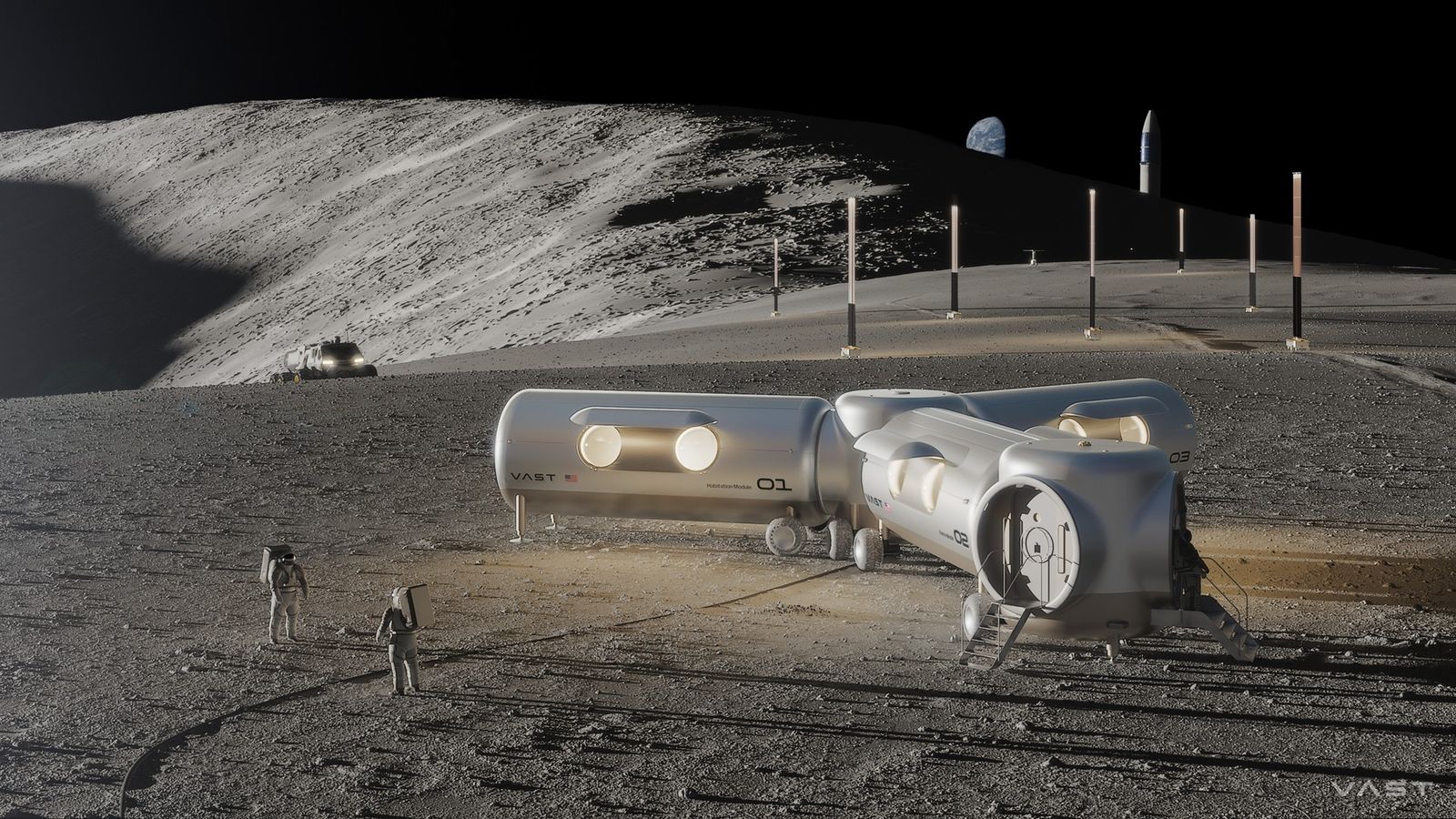
Vast said it intends to offer four categories of hardware drawn directly from systems it has already built or is building for Haven 1, its orbital station targeted for launch no earlier than early 2027. These are a solar power station providing generation, storage, and distribution; a lunar airlock derived from Haven’s design and intended to help astronauts manage dust during surface operations; a multi module habitat meant to support long duration crewed stays; and a constellation of communications and navigation satellites intended to give continuous coverage of the lunar south pole, the region NASA and most other national space agencies have targeted for future landings because of its water ice deposits and near constant sunlight at certain peaks. Vast frames the plan around NASA’s own three phase roadmap for a Moon Base, covering initial infrastructure delivery, enablement of early operations, and eventually support for a semi permanent crew presence.
“Vast has the manufacturing capability, flight heritage, and technical expertise needed to help build humanity’s first lunar outpost,” said Max Haot, the company’s chief executive, in a statement announcing the division. The company argues that because its lunar hardware would reuse structural, life support, thermal, and avionics designs already validated on Haven 1, it can offer NASA and other customers a faster and cheaper path to lunar infrastructure than starting from scratch. Vast also says its proposed lunar communications satellites would complement NASA’s own Lunar Communications Relay and Navigation Systems program and reduce reliance on the agency’s already heavily booked Deep Space Network of ground antennas.
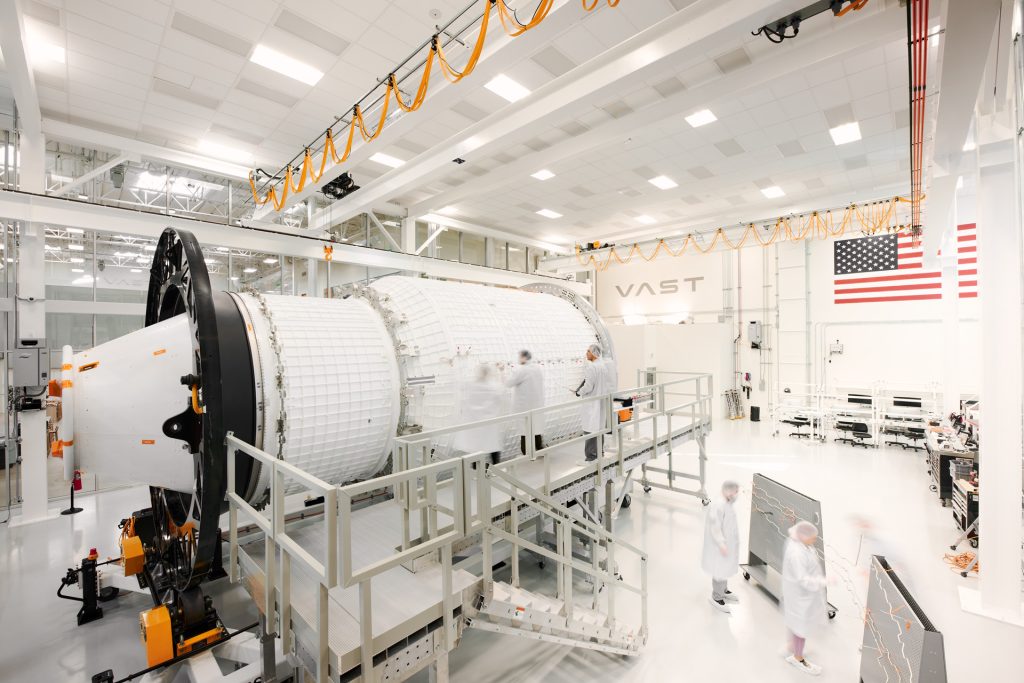
The announcement places Vast in a crowded field of companies pursuing NASA’s post Artemis lunar infrastructure plans. NASA already selected Astrobotic, Intuitive Machines, and Firefly Aerospace in June 2026 for nearly 600 million dollars combined to build four lunar landers under the same Moon Base program, targeting landings in late 2028, and other companies are separately pursuing surface power and habitat work. Vast’s new division would not compete directly with those lander awards but is aimed at the power, airlock, habitat, and communications hardware NASA is expected to solicit in later phases of the same program. All of this comes as Vast itself is still working through final integration of its first orbital station rather than having yet flown one. Haven 1’s own launch, once targeted for May 2026, was pushed back to no earlier than the first quarter of 2027 as the company completed structural, thermal, and life support integration, a timeline that underscores how much of Vast’s lunar pitch rests on heritage from hardware that has not yet reached orbit.
Vast has not disclosed a proposed cost, schedule, or specific NASA contract tied to the new division, describing it instead as a strategic building block ahead of anticipated agency solicitations. It is also not yet clear which, if any, of the four hardware lines will receive government funding, how they would be tested before being sent to the lunar surface, or how Vast’s roadmap will mesh with competing proposals already in progress from other companies pursuing the same NASA program. NASA’s own description of the broader Moon Base effort, offered by the program’s acting director of cargo landers when the lander awards were announced, was that the agency is “building a proving ground for Moon Base operations” by accelerating its ordering cadence, a framing that leaves open exactly when, or whether, hardware like Vast is proposing will be formally solicited.