

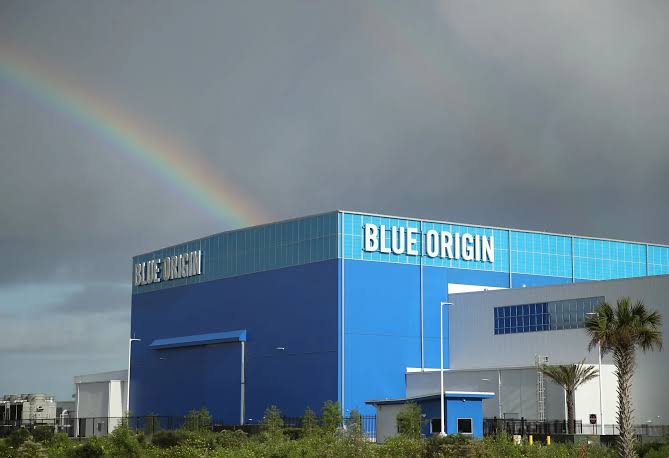
Blue Origin is raising outside capital for the first time since Jeff Bezos founded the company in 2000. The Wall Street Journal reported on 24 September 2026 that the round had raised 10 billion dollars at a valuation of 140 billion dollars, with Bezos personally contributing 2 billion dollars of that amount as part of a cumulative investment in the company of about 30 billion dollars since 2000. Days later, on 30 September 2026, chief executive Dave Limp was reported discussing the round publicly for the first time, telling reporters it remained oversubscribed and had not formally closed, which left some uncertainty about whether the amount raised would change before the round is finalized. One account of Limp’s comments put the target nearer 8 billion dollars rather than 10 billion, a discrepancy that has not been resolved in public reporting. The announcement marks a historic shift for a rocket and space infrastructure company that has operated for 26 years almost entirely on Bezos’s personal wealth, funded largely through his periodic sales of Amazon stock.
Coatue Management is reported to be leading the round with a contribution of about 4 billion dollars. Valuation figures have shifted since Blue Origin’s plans to seek outside capital first became public in July 2026, when reporting described a pre money valuation near 130 billion dollars. The more recent figures tied to the September reporting put the post money valuation closer to 140 billion dollars, reflecting investor demand that reportedly exceeded the original target. Blue Origin has not published its own figures confirming any of these numbers, so the exact size and final valuation remain unconfirmed.
Limp said the new capital would support faster operations, new technologies and hiring, adding that an external valuation would help the company attract and retain talent in a competitive labor market for aerospace engineers. Bezos, commenting on the broader competitive landscape, said that SpaceX would succeed, that Blue Origin would succeed, and that companies that do not yet exist would succeed as well, a remark framing the capital raise as part of a widening field of space companies rather than a two way contest with SpaceX alone.
The money arrives as Blue Origin works through a costly setback. In May 2026, a New Glenn vehicle was destroyed during ground testing, damaging the company’s launch pad at Cape Canaveral Space Force Station. Reporting describes roughly 1,000 workers engaged in pad repairs, with the company targeting a return to flight before the end of 2026. Separately, on 29 September 2026, NASA added a larger New Glenn variant known as the 9 by 4 configuration, featuring nine BE 4 booster engines and four BE 3U upper stage engines, to its Launch Services II contract vehicle, a procurement step that makes the design eligible for future NASA mission awards without assigning it a specific payload or launch date.
Reporting on the funding round also points to where Blue Origin intends to spend the money beyond rocket operations. The company has described plans for a satellite communications network called TeraWave, with more than 5,400 satellites planned and deployment reportedly beginning in the fourth quarter of 2027, as well as an additional, larger satellite initiative described in some reporting as Project Sunrise, aimed at space based data and AI computing infrastructure. Blue Origin’s reported 2025 revenue was approximately 800 million dollars, with projections cited in reporting of about 1.4 billion dollars for 2026 and a company target exceeding 30 billion dollars in annual revenue by 2030, though these are company projections rather than audited results and should be read as targets rather than guaranteed outcomes.
The raise lands amid a broader surge of private capital flowing into space companies through 2026. For Blue Origin specifically, moving from a single deep pocketed owner to a syndicate of outside institutional investors changes its governance in ways that have not yet been detailed publicly.
Several details remain unconfirmed. Blue Origin has not disclosed the full list of investors beyond Coatue Management and Bezos himself, nor has it stated a firm closing date or final size for the round, with figures reported anywhere from 8 billion to 10 billion dollars. It is also unclear how the funding will be split between New Glenn operations, the satellite programs and other initiatives, and whether outside investors will gain board seats or other governance rights as a condition of their investment.