

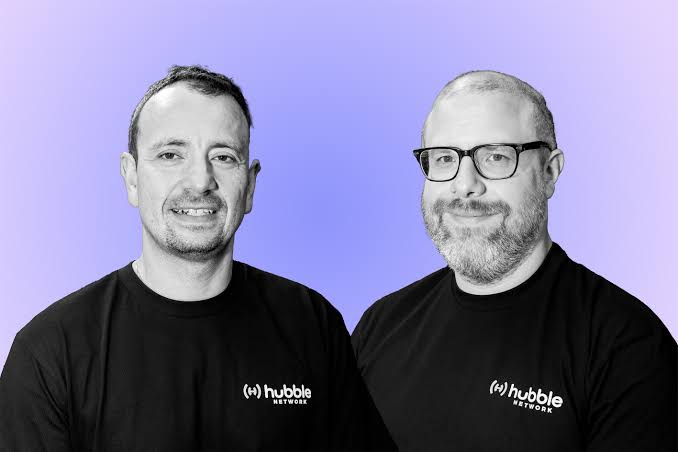
Hubble Network, a Seattle based satellite communications startup, said on 23 September 2026 that it had raised 200 million dollars in a Series C funding round at a valuation of 1.6 billion dollars, while also opening its satellite Bluetooth service to any standard Bluetooth device rather than a limited set of pilot customers. The round was led by Smith Point Capital, with participation from Seraphim, Carthona Capital, Earthshot Ventures, Y Combinator, and RPM Ventures, and brings the company’s total funding to roughly 300 million dollars since it was founded in late 2021 by chief executive Alex Haro, who previously founded the family location sharing company Life360, and cofounder Ben Wild, who had worked on Amazon’s Sidewalk connectivity network. The new round arrives about a year after Hubble closed a 70 million dollar Series B in September 2025, a pace of fundraising that reflects investor interest in the direct to satellite connectivity sector more broadly.
The company’s technology allows ordinary Bluetooth chips, the kind already built into billions of tags, sensors, and consumer devices, to transmit location and status data to satellites in low Earth orbit without any additional hardware or a cellular modem. Hubble says the change amounts to a shift from limited access, in which only a small number of partners could reach its satellites, to general availability, in which any company already using its terrestrial Bluetooth network can extend coverage to its satellites through a firmware update alone. New customers can request a development kit and get satellite connectivity working within minutes, according to the company. The system needs no change to the Bluetooth chips already inside devices, only a firmware update, and Hubble says the hardware cost for a trackable tag runs to roughly 50 cents plus a subscription of around 4 dollars a month, well below typical cellular tracking devices. Hubble currently operates six satellites, built with satellite manufacturer Muon Space, and says it plans to grow that fleet to 60 by 2030, while its existing terrestrial network already reaches nearly 90 million ground based Bluetooth scanners and more than 100 million gateways across 170 countries, serving more than 500,000 active devices, which the company says is ten times more than a year earlier. Samsara, a software company focused on fleet and asset management, is named as an early customer already using the combined ground and satellite network. Alex Haro has said that when the company first proposed linking Bluetooth chips to satellites, “most of the industry said the physics wouldn’t allow it,” a skepticism the company points to its growing customer base and satellite count to counter.
The pitch is aimed at industries that need to track low cost assets, such as shipping containers, pallets, and equipment, in places with no cellular coverage, including oceans, deserts, and remote supply chains. Keith Block, founder and chief executive of lead investor Smith Point Capital, said in a statement accompanying the announcement that the cost and complexity of existing connectivity options had limited visibility to only the most valuable assets, a gap the company’s approach is intended to close.
Hubble is one of several companies competing to connect ordinary consumer and industrial devices directly to satellites without new hardware, a category that also includes larger, better capitalized rivals building direct to device networks aimed at full cellular service, such as AST SpaceMobile, as well as other Bluetooth and short range specialists targeting similar asset tracking customers. Hubble’s approach differs by working with existing Bluetooth chips already embedded in devices, rather than requiring a new class of satellite capable phone or a specially designed modem, which the company argues gives it a much larger potential base of devices to serve from the outset.
What the announcement does not settle is how the expanded network will perform once large numbers of new customers without direct engineering support from Hubble begin activating devices at scale, how reliable coverage will be as the constellation grows from six satellites toward its 2030 target, or how the company’s pricing will compare with rival services over time. Hubble has not disclosed revenue figures, and independent data on customer retention or network performance under heavier load has not yet been published.