

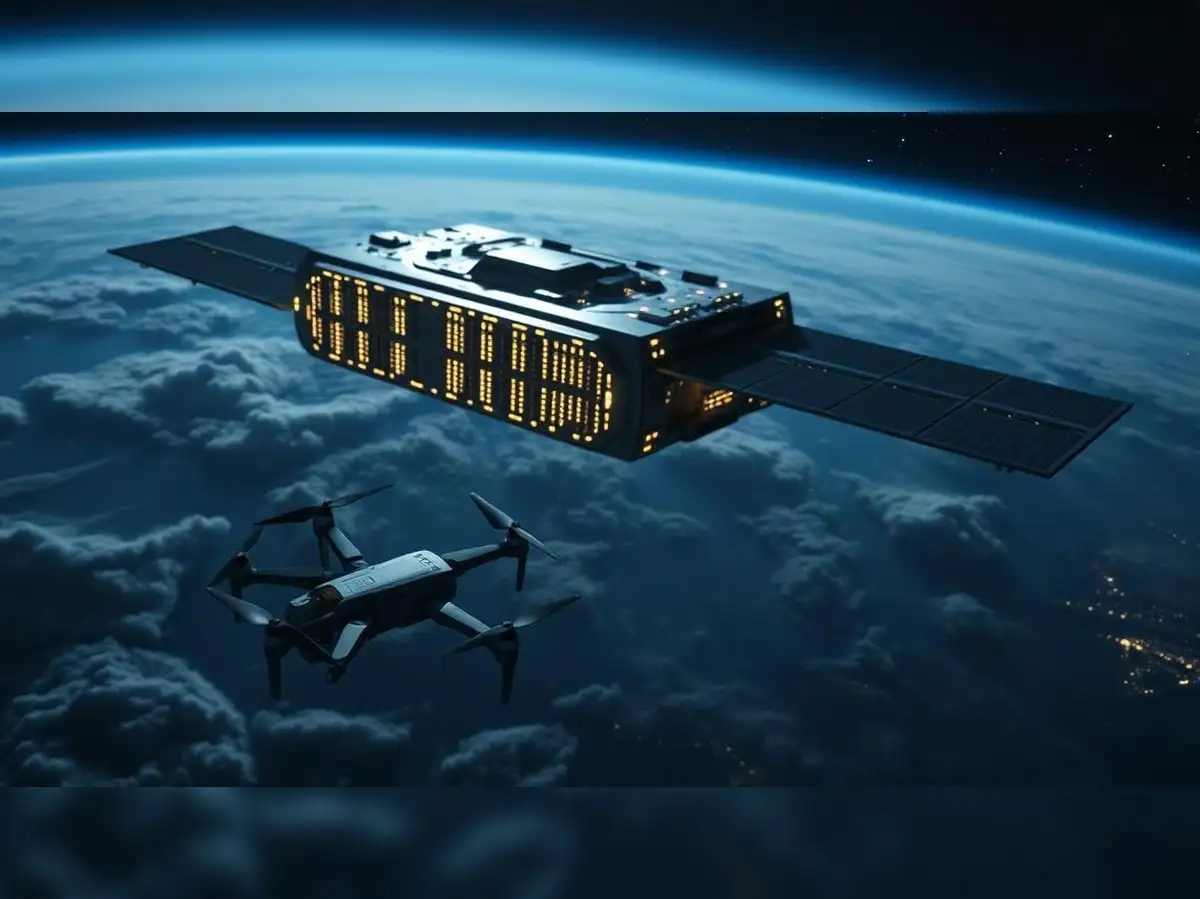
Google has confirmed that a prototype satellite carrying four of its custom artificial intelligence chips is scheduled to launch on 1 October 2026, the first orbital test of hardware built for Project Suncatcher, the company’s research effort into running AI computation from space. The satellite will fly as a rideshare payload on a SpaceX Falcon 9 carrying the Transporter 18 mission, and was built in partnership with Planet, the San Francisco Earth observation company, which is providing the spacecraft platform. Aboard is a set of four Trillium TPUs, Google’s specialized processors for machine learning, powered by roughly one kilowatt of solar generation.
The mission is meant to answer a narrow set of engineering questions rather than prove a finished product. Google says its TPUs have already shown they can withstand a total ionizing radiation dose greater than what they would accumulate over five years in orbit, according to Travis Beals, the company’s senior director for what it calls paradigms of intelligence. Cooling is a separate challenge, since chips that run hot on the ground have nowhere to shed heat by convection in a vacuum. Google says it is testing a combination of heat pipes and radiators to draw heat away from the processors and radiate it into space. A second phase, planned for early 2027, will add two more satellites intended to test the high bandwidth optical links the eventual constellation would need, describing the required precision, in Beals’s words, as “similar to hitting a coin size target from miles away.” Google calls the current spacecraft, which it refers to internally by the shorthand MVP, a learning mission rather than an operational product, and Beals said of the ground based testing that preceded launch preparations that “tests like this rarely go as planned, so we were pleasantly surprised that the hardware held up.”
The idea behind Project Suncatcher, first outlined in a Google research paper this year, is that a constellation of solar powered satellites flying close together, in clusters of roughly 81 spacecraft spaced 100 to 200 meters apart in an orbit around 650 kilometers up, could receive near constant sunlight and offer more computing capacity than land based data centers limited by available electricity and permitting. Google is not alone in pursuing the idea. Nvidia backed Starcloud has already flown an H100 graphics processor aboard its Starcloud 1 satellite and raised further funding to expand the concept, while SpaceX has told the Federal Communications Commission that it wants approval to eventually deploy up to one million satellites for its own orbital computing network, named Starmind. Both rivals moved from announcement to an operating satellite faster than Google has so far, underlining how early stage Project Suncatcher remains relative to competitors chasing the same idea.
The appeal for large technology companies is straightforward on paper. Data centers on Earth increasingly compete with households and industry for scarce electricity and face lengthy permitting delays, while a solar powered satellite has access to sunlight for most of its orbit and does not need land, water for cooling, or a grid connection. Whether that advantage survives contact with the economics of launch, manufacturing, and orbital debris rules is a separate question that this test flight does not resolve on its own.
What remains unconfirmed is how the prototype will actually perform once in orbit, since the mission had not yet flown as of this report and Google’s public statements describe expected performance rather than results already gathered from this specific satellite. The company has also not disclosed a cost estimate for the eventual constellation, how many launches a full network would require, or a firm timeline beyond the early 2027 satellites planned to test communications. Independent assessment of whether orbital computing can compete with terrestrial data centers on cost, rather than only on access to power, will depend on data that has not yet been published.