

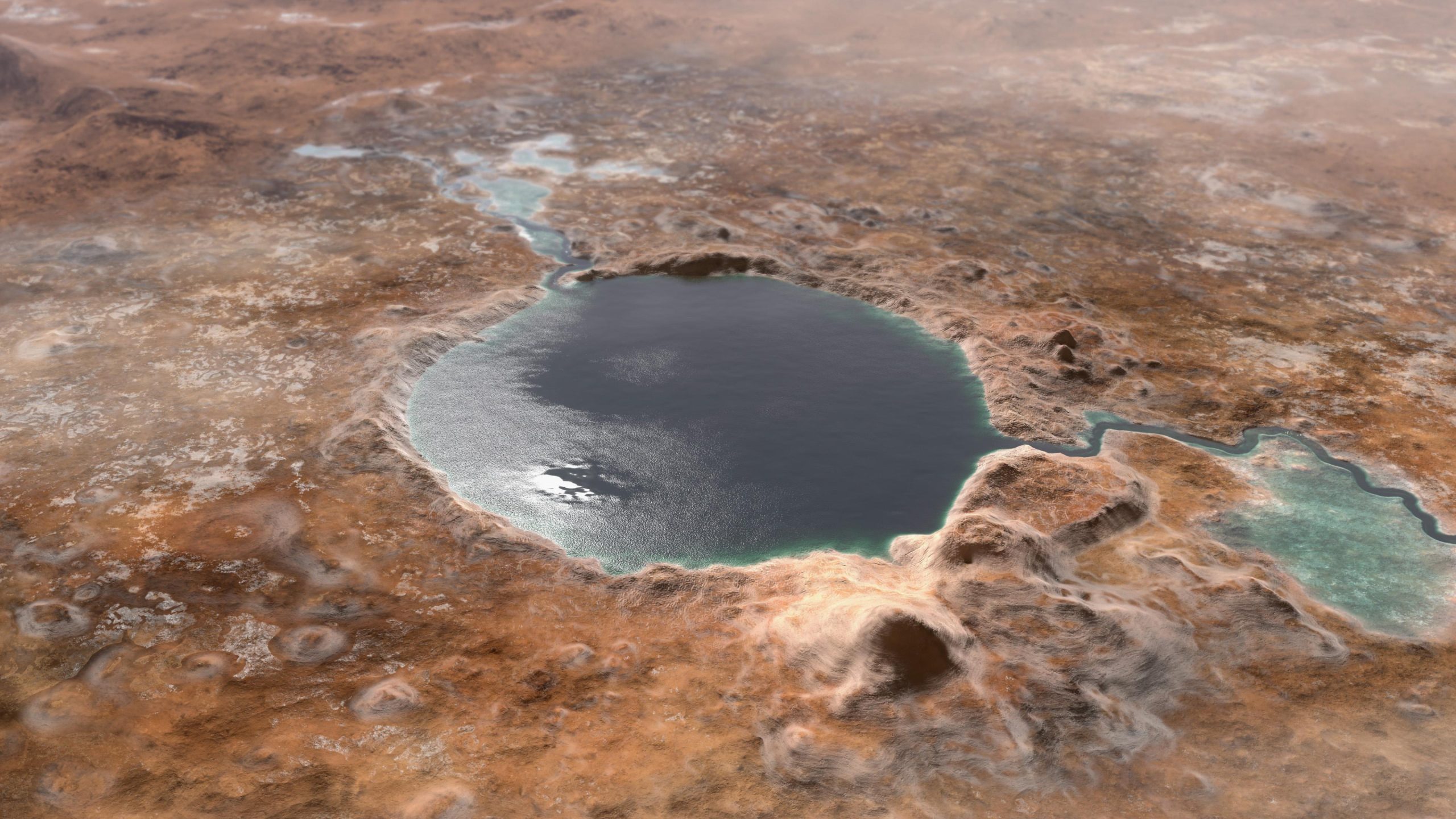
NASA’s Jet Propulsion Laboratory announced on 21 September 2026 that the Perseverance rover has uncovered evidence that a region of Jezero Crater on Mars called the Margin Unit experienced at least three separate episodes of water interaction, overturning an earlier hypothesis that the area simply formed from a single ancient lake. The findings, published in the journal Communications Earth and Environment and led by Candice Bedford of Purdue University, were drawn from rover observations gathered between 8 and 16 October 2023 and from laboratory style analysis using the rover’s SuperCam instrument, which fires a laser from several meters away to vaporize tiny amounts of rock and read the resulting spectrum for clues about mineral composition.
Scientists had expected the Margin Unit, which sits along the inner rim of Jezero Crater, to be made of sedimentary rock deposited by the lake that once filled the crater. Instead, SuperCam readings across more than 185 bedrock targets spanning about 265 meters (870 feet) of elevation showed igneous rock, meaning rock that formed from cooling magma, that was later altered by water on three distinct occasions. The first episode involved carbon dioxide rich groundwater reacting with the mineral olivine to produce carbonate deposits in rock fractures. A second episode involved the crater lake itself, producing silica through further reaction with olivine. A third and more surprising episode showed signs of hot fluid circulation through the rock, leaving behind a mineral vein containing fluorite and calcium sulfate, minerals associated with hydrothermal activity rather than a static lake environment.
“Mars constantly throws surprises at you,” said Bedford, describing a decade of experience working with Mars rover data. She said the original hypothesis going into the Margin Unit campaign was that carbonate minerals visible from orbit had formed through interaction with the Jezero lake alone, and that the rover’s close up measurements instead revealed a far more layered history. Bedford also compared the mineral filled fractures to plumbing, saying the fractures acted like pipes through which groundwater moved, leaving carbonate behind much like limescale forms in a pipe on Earth.
The research team included Roger Wiens of Purdue University, the principal investigator for the SuperCam instrument, along with Briony Horgan, who leads science planning for part of the Perseverance mission, and former doctoral students Stephanie Connell and Brad Garczynski, in addition to international collaborators. Purdue University published its own account of the findings on 25 September 2026, and additional independent coverage followed in the days after the Jet Propulsion Laboratory’s initial release.
The discovery matters because each of the three water episodes identified by the team represents a different kind of environment that could have been chemically favorable to microbial life, had any existed on ancient Mars. Groundwater reactions with olivine can release hydrogen that simple organisms might use for energy, while both the carbonate and silica minerals formed in the process are known on Earth to preserve biological signatures over long spans of geological time. A hydrothermal system, the kind suggested by the fluorite bearing vein, is also significant because similar systems on Earth support microbial communities that do not depend on sunlight. Taken together, the findings suggest that Jezero Crater hosted a more chemically dynamic and layered history than the single lake model implied, a conclusion that researchers say should inform how future scientists interpret samples that Perseverance has already collected and cached for potential return to Earth.
Several aspects of the discovery remain open. The research team has not established a precise timeline for when each of the three water episodes occurred relative to one another, nor has it determined how long each period of water activity lasted. Scientists have also not yet determined whether organic molecules or other direct biosignatures are present in the affected rocks, a question that will likely depend on detailed laboratory analysis once samples from the region reach Earth through a future sample return mission, a mission whose schedule and funding remain unsettled. Until then, the Margin Unit findings stand as an interpretation built from remote rover measurements rather than a confirmed record of ancient Martian life.