

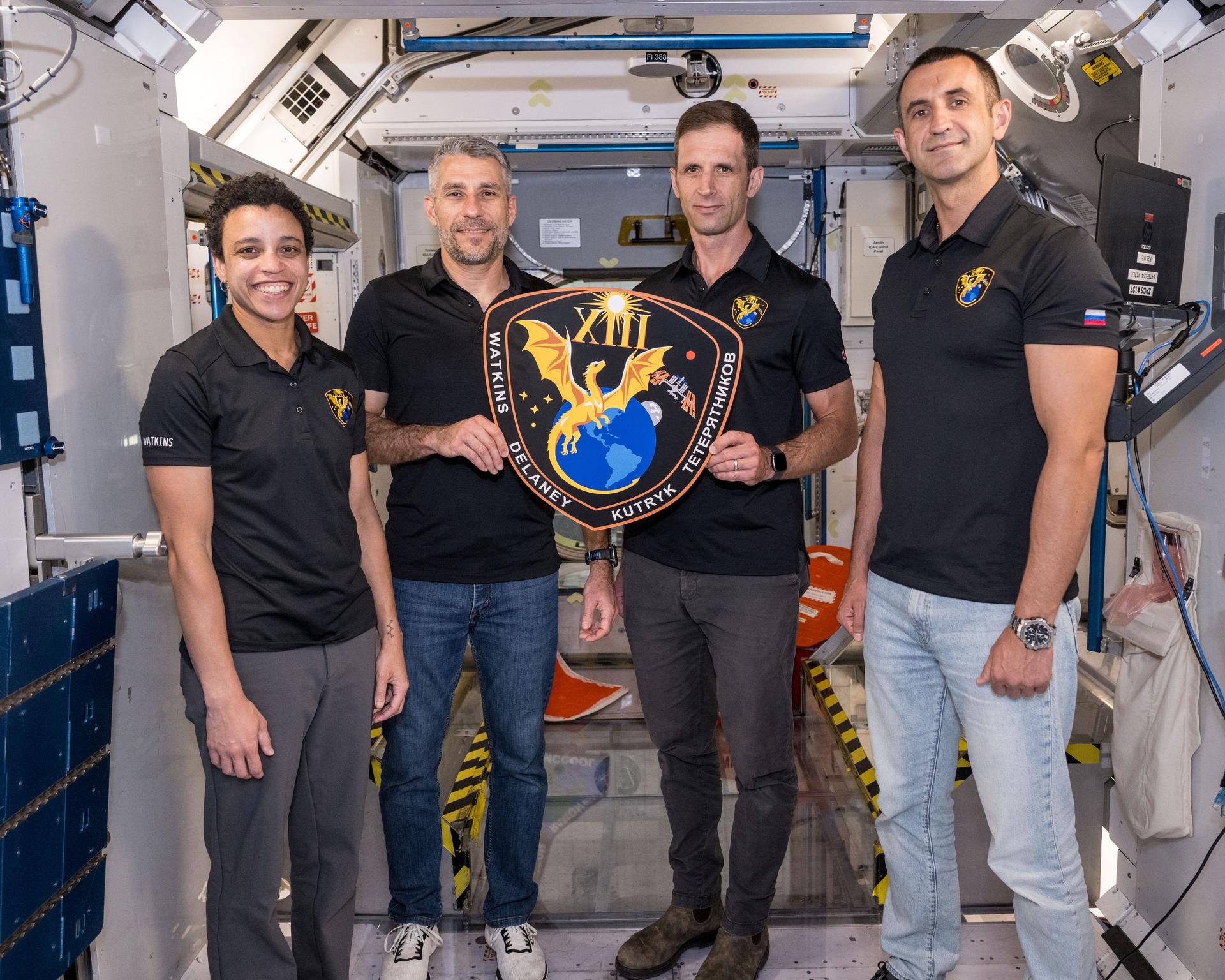
NASA, SpaceX and their international partners completed a Flight Readiness Review on 25 September 2026 for Crew 13, the next crew rotation mission to the International Space Station, clearing the way for final launch preparations. The review examined SpaceX’s Falcon 9 and Crew Dragon transportation system, mission operations and ground support functions, as well as the station’s own readiness to receive an incoming crew. Liftoff is targeted for no earlier than 11:10 a.m. Eastern time on Thursday 1 October 2026, from Space Launch Complex 40 at Cape Canaveral Space Force Station in Florida.
The Crew 13 team is commanded by NASA astronaut Jessica Watkins, with NASA astronaut Luke Delaney serving as pilot. Rounding out the four person crew are mission specialists Joshua Kutryk of the Canadian Space Agency and Sergey Teteryatnikov of Roscosmos, Russia’s space agency. The crew arrived at NASA’s Kennedy Space Center on the afternoon of 26 September, around 1 p.m. Eastern time, to begin the final stretch of prelaunch activity, which NASA says includes spacesuit checks, equipment reviews, mission briefings and quarantine protocols intended to reduce the risk of the crew falling ill before flight. The mission’s patch, revealed in February 2026, features a golden dragon design that NASA has said is meant to evoke the Apollo 13 mission emblem.
Once launched, the Dragon spacecraft is expected to reach the station in under nine hours, docking at the forward facing port of the Harmony module at around 8 p.m. Eastern time on launch day, according to NASA. After boarding the station, the four astronauts will become members of Expedition 75, the station’s ongoing rotation of resident crews conducting research and maintenance in orbit. NASA has described the run up to launch as a series of prelaunch activities and intensive reviews meant to confirm that the crew, the station and both the Dragon spacecraft and Falcon 9 rocket are ready, culminating in the Flight Readiness Review completed on 25 September.
Crew 13 flies under NASA’s Commercial Crew Program, through which the agency buys crew transportation services from SpaceX to maintain a continuous American human presence aboard the International Space Station. SpaceX’s Crew Dragon has flown numerous NASA crew rotation missions to the station, generally carrying a mix of NASA astronauts, partner agency crew members and, on selected flights, Roscosmos cosmonauts, alongside the station’s longstanding Russian Soyuz vehicle. Missions like Crew 13 are what keep the station’s crewed presence unbroken as earlier crews complete their rotations and return home.
The flight also continues a pattern of mixed nationality crews flying together aboard Crew Dragon, reflecting the International Space Station’s status as a joint project involving NASA, Roscosmos, the European Space Agency, the Japan Aerospace Exploration Agency and the Canadian Space Agency. Having a Canadian mission specialist and a Russian mission specialist fly together alongside two NASA astronauts illustrates how the vehicle has become woven into the station’s routine operations. For Canada and Russia alike, seats aboard an American built spacecraft have become part of how each country sustains its own human spaceflight program, even as both continue to pursue their own national priorities in orbit.
Several details about the mission remain to be confirmed closer to launch. NASA has not yet announced which current station crew members Crew 13 will relieve, how long the incoming crew is expected to remain aboard, or the full slate of research the four astronauts will carry out once aboard the orbital laboratory.
The launch date itself is listed as no earlier than 1 October, and as with most crewed missions, it remains subject to change based on weather at the launch site and along the Falcon 9’s ascent corridor, the readiness of the rocket and spacecraft, and conditions aboard the station itself. NASA has said it will provide further updates, including live coverage details, as the launch date approaches, but as of 26 September no earlier opportunity or backup date had been announced.