

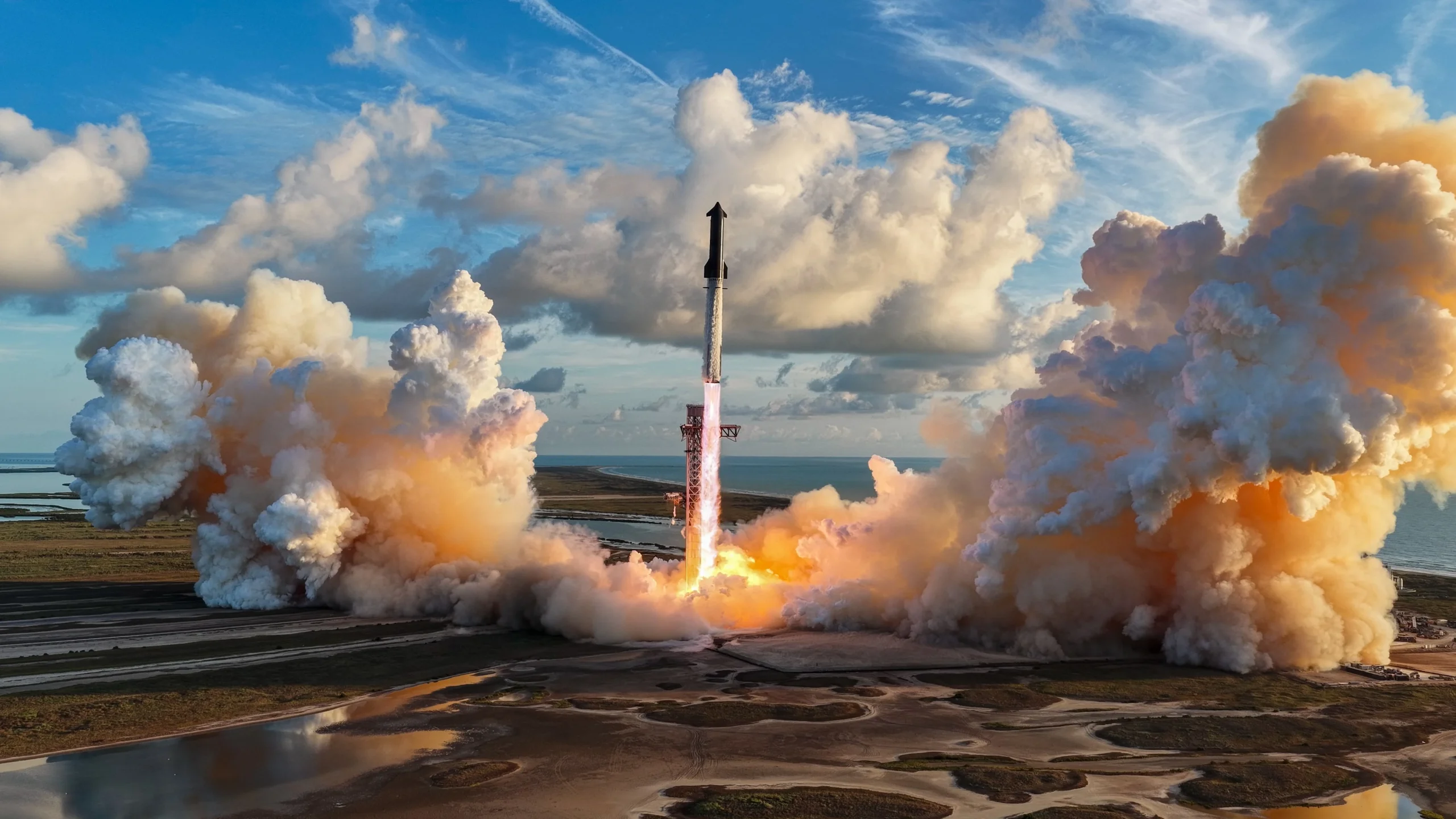
SpaceX launched its Starship rocket into orbit for the first time on 28 September 2026, a milestone the company had chased across thirteen earlier test flights that all followed suborbital paths. The vehicle lifted off from Starbase in Boca Chica, Texas, at 7:48 a.m. local time (12:48 UTC), carrying 26 Starlink Version 3 broadband satellites atop the 124 meter (407 foot) rocket, the tallest and most powerful ever flown.
The ascent was not without drama. One of the six Raptor engines on the Ship upper stage, designated Ship 41, shut down shortly after liftoff. A SpaceX spokesperson, Dan Huot, initially told viewers on the company’s livestream that the attempt to reach orbit had been called off, then reversed that assessment minutes later as flight controllers concluded the remaining engines could still complete the burn. “We are not giving up yet,” Huot said during the broadcast. About 25 minutes after launch, Ship 41 fired a single Raptor engine to complete orbital insertion, and mission control confirmed over the loudspeakers that Starship was orbital.
The Super Heavy booster, designated Booster 21, separated from Ship 41 minutes into the flight and splashed down in the Gulf of Mexico about seven minutes after liftoff. SpaceX did not attempt to recover or catch the booster on this flight, and several of its engines shut down during descent, though the company characterized those shutdowns as non critical to the outcome. Ship 41 then circled Earth roughly six times over about nine hours and fifty minutes before firing its engines for an 11 second burn to deorbit, splashing down in the Pacific Ocean off the coast of Chile, a new recovery zone for the program.
Deployment of the 26 satellites began about 34 minutes after liftoff and continued over a 30 minute window. Three of the satellites were fitted with cameras intended to capture footage of Ship’s heat shield tiles during the mission, data SpaceX engineers can use to assess how the tiles performed under the stresses of orbital flight and reentry. The new satellites add to a Starlink constellation that already numbered around 11,000 spacecraft in orbit, according to reporting on the mission.
Starship’s path to this point has been marked by repeated suborbital tests, each meant to validate a stage of the reentry and recovery sequence rather than risk uncontrolled hardware over populated areas on a full orbital pass. Elon Musk described that caution as deliberate, saying that SpaceX’s “popularity would diminish very rapidly” if falling debris endangered people on the ground. Following the successful orbital insertion, Musk posted on the social platform X that the flight represented the first orbital flight of Starship and called it successful.
The achievement carries weight beyond the Starlink constellation. NASA has selected a variant of Starship as the crewed lunar lander for the Artemis III and Artemis IV missions, and the agency has indicated Artemis III is running behind its original schedule, with a landing attempt not expected before summer 2027 at the earliest. Reaching orbit reliably, and eventually demonstrating propellant transfer between Starship vehicles in space, are prerequisites SpaceX must clear before Starship can be certified to carry astronauts to the lunar surface. SpaceX has indicated that, depending on how engineers assess this flight’s data, the next Starship test could attempt to catch the upper stage back at Starbase using the launch tower’s mechanical arms, a recovery method already used repeatedly for Super Heavy boosters on earlier flights.
Several questions remain open. SpaceX has not said what caused the early shutdown of the Raptor engine on Ship 41, nor whether the issue will require design changes before the next flight. The company also has not confirmed a date for the next test flight or specified how soon it intends to reuse hardware from this mission. NASA has not yet said publicly whether this flight changes its own timeline assessment for Artemis III. Those details are likely to emerge as SpaceX completes its post flight review and as NASA weighs progress against the Artemis schedule it laid out in recent months.