

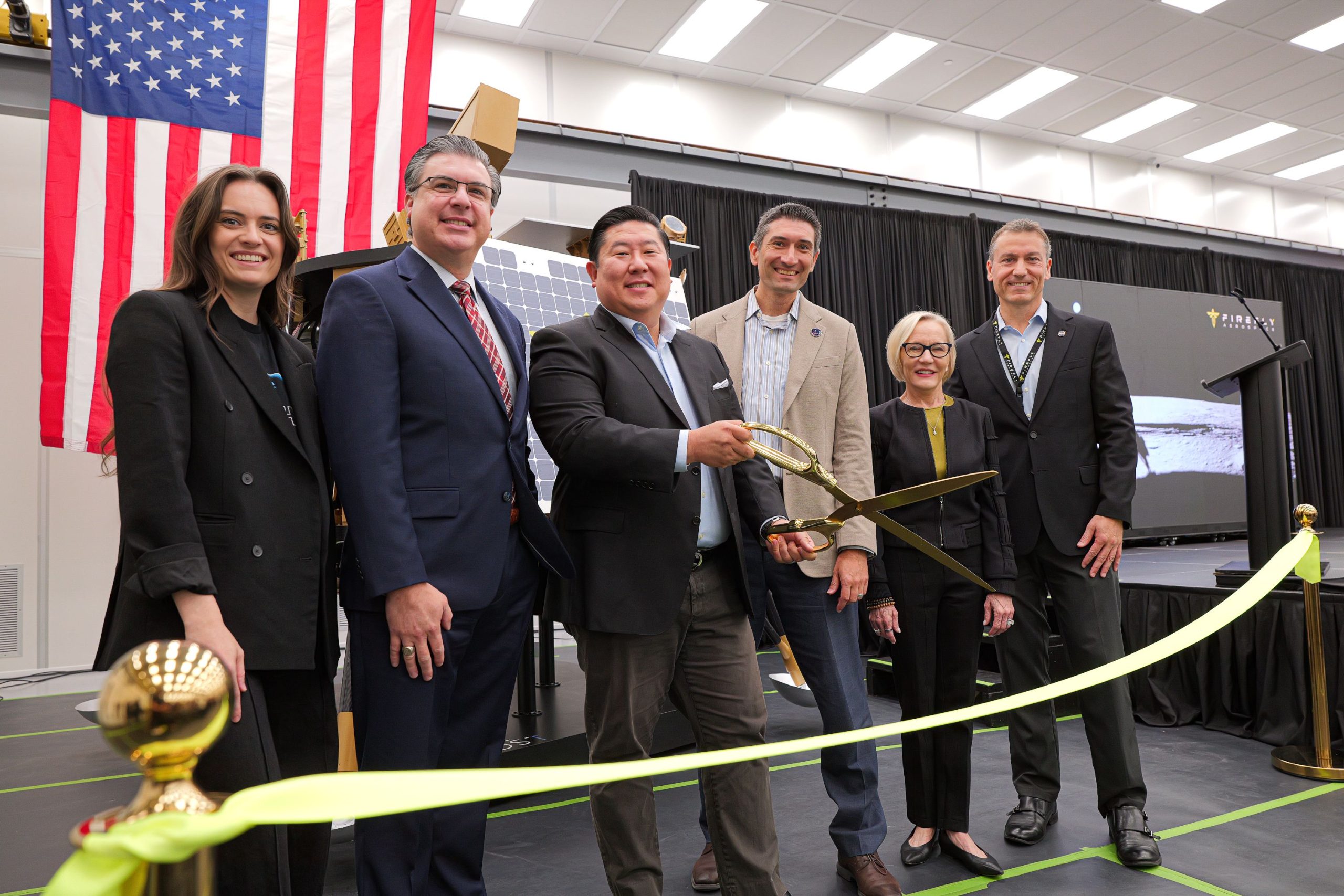
Firefly Aerospace cut the ribbon on a new spacecraft cleanroom at its headquarters campus in Cedar Park, Texas, on 22 September 2026, a facility the company says is four times larger than its existing cleanroom and able to support assembly, integration and testing of up to 12 lunar landers and orbital vehicles at once. The expansion was funded in part by an 8.2 million dollar grant from the Texas Space Commission and a 1 million dollar grant from the city of Cedar Park, according to the company and local officials who attended the opening.
The new cleanroom carries an ISO Class 8 rating for contamination control and sits within a 144,000 square foot campus in north Cedar Park that Firefly has built out as its spacecraft manufacturing base. Firefly said the added capacity is intended to support production of its Blue Ghost lunar landers and its Elytra orbital vehicles, two product lines central to the company’s plans for lunar delivery and in space logistics work for NASA and for commercial and defense customers. Ray Allensworth, Firefly’s vice president of spacecraft, said at the opening that it was meaningful to have that level of support from the city and from the state.
Firefly became the first commercial company to complete a fully successful, upright soft landing on the Moon when its first Blue Ghost lander touched down in March 2025 under NASA’s Commercial Lunar Payload Services program, generally known as CLPS. The company holds contracts for five additional lunar missions, and Firefly has said its next flight, planned for early 2027, will combine a Blue Ghost lander with an Elytra orbital vehicle for the first time, pairing lunar surface delivery with an orbital platform that can host payloads, relay communications or perform other services in cislunar space. Firefly has also said it is developing a larger lander variant intended to carry heavier cargo and infrastructure to the lunar surface, and the company holds Defense Innovation Unit contracts covering space domain awareness and deorbit services.
Adam Schlesinger, NASA’s CLPS project manager, attended the ribbon cutting and framed the expansion in terms of a maturing lunar delivery market, saying that companies in the program are less concerned with securing a share of NASA business than with growing the share each one can win. “Folks aren’t really competing for a piece of the pie,” Schlesinger said. “It’s now competing for how big their piece is.” The mayor of Cedar Park, Jim Penniman Morin, also spoke at the event, saying the city was proud of its partnerships with Firefly and the state.
The investment reflects a broader push by Texas to position itself as a hub for commercial spacecraft manufacturing, building on the state’s existing role in launch through SpaceX’s Starbase site in South Texas. The Texas Space Commission, created by the state legislature to fund space and aeronautics research and infrastructure, has now backed Firefly’s cleanroom expansion as part of that strategy, though the agency has not disclosed how the Firefly award compares in scale with other grants it has issued.
What the expanded cleanroom will mean in practice depends on execution still to come. Firefly has not disclosed a detailed production schedule showing how many landers or Elytra vehicles it expects to build annually once the new space is fully in use, nor has it named the customers for lunar missions beyond the five already under contract with NASA. The company also has not said whether the larger lander variant it is developing has secured a customer or a target flight date. Those specifics, along with the performance of the 2027 combined Blue Ghost and Elytra mission, will offer the clearest test of whether the expanded facility translates into a faster cadence of lunar deliveries.