

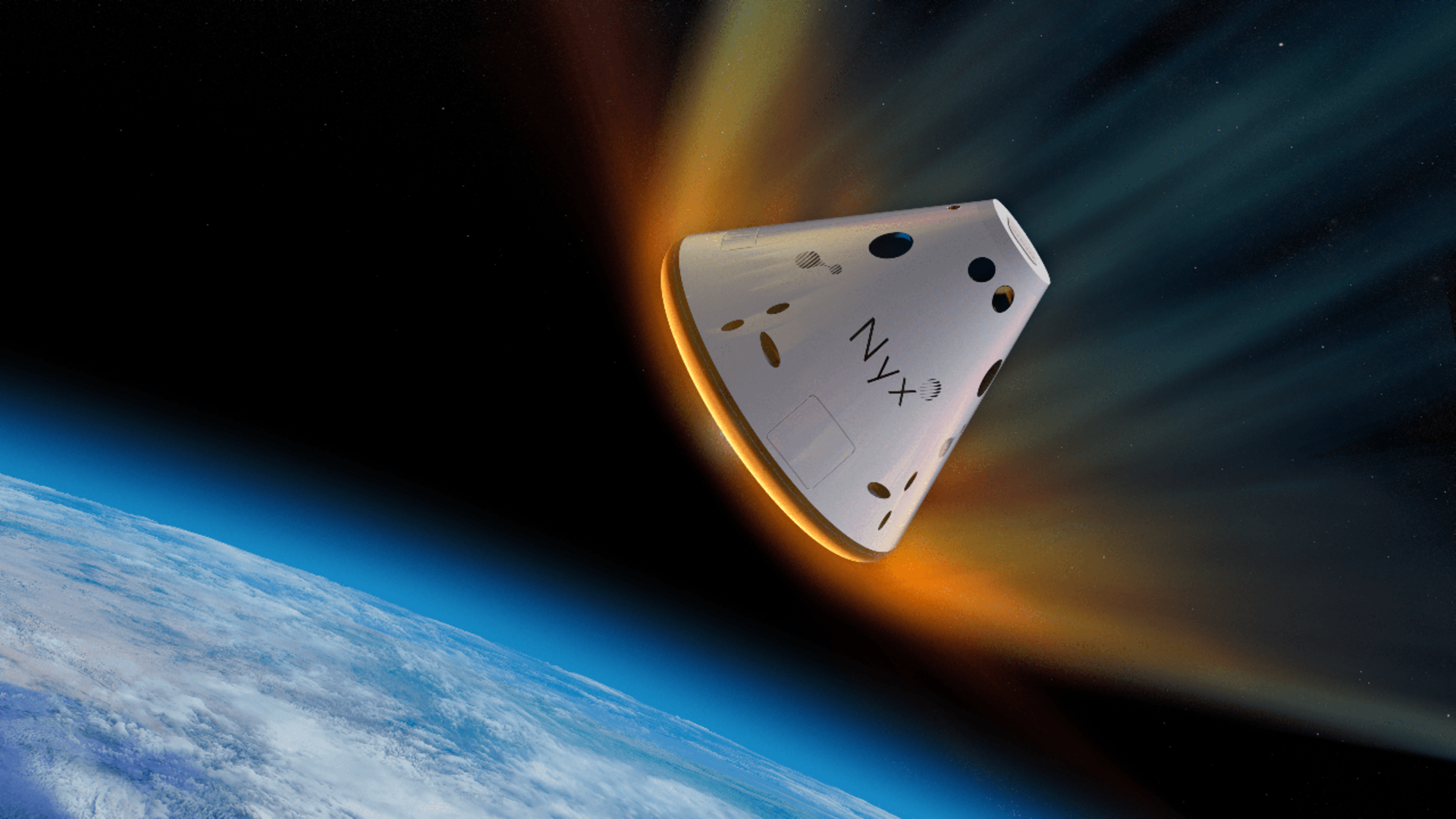
The European Space Agency has signed a service contract worth 760 million euros, about 882 million US dollars, with The Exploration Company for development of an autonomous cargo return capsule under the ALADDIN program, the two parties confirmed on 10 September 2026. The agreement was announced during the International Space Summit in Paris and marks the largest single contract ESA has awarded to a commercial European company for an independent low Earth orbit transportation service.
Under the deal, 310 million euros will fund a demonstration mission of the Nyx capsule, with an additional 450 million euros available for two further service missions if the demonstration succeeds. ESA Director General Josef Aschbacher described the arrangement as evidence that the agency can act as an anchor customer, saying it strengthens Europe’s commercial space sector and turns ambition into reality, according to European Spaceflight and a report published by space journalist Douglas Messier. Helene Huby, founder and chief executive of The Exploration Company, said the contract reflects a shift in how space technology gets built in Europe, noting that the company began with private funding only and has now reached a technical maturity level where ESA and its member states can act as anchor clients to help finalize the vehicle.
The Nyx capsule is designed to carry as much as 3,000 kilograms of cargo to and from orbital destinations, a down mass figure the company describes as the largest of any vehicle in development worldwide. It is intended to be reusable for up to 10 missions, using a carbon based, low density thermal protection system, autonomous docking software, and modular avionics built from commercially available components, according to details published on the company’s own website. ESA funding will cover 60 percent of the demonstration mission cost, with private investment covering the remaining 40 percent, and missions flown on a European launch vehicle are eligible for up to 50 million euros in additional incentive funding from ESA. The first Nyx demonstration flight is expected to launch on an Ariane 6 rocket from French Guiana, with docking to the International Space Station targeted no later than the second quarter of 2029, ahead of the station’s planned retirement.
The contract follows closely on a separate announcement that The Exploration Company closed a 387 million euro Series C funding round on 8 September 2026, according to EU Startups, bringing its total funding since being founded in 2021 by Huby and a group of aerospace veterans to roughly 680 million US dollars. The company operates development sites in Munich, Bordeaux, and Turin, and has said it is expanding into the United States and the United Arab Emirates. Beyond the ESA agreement, the company reports around 2 billion US dollars in pre booked commercial missions, 10 in total, with the private space station developers Axiom Space, Starlab, and Vast named as anchor customers for future cargo runs once the International Space Station is retired.
The award is formally the second phase of what ESA previously called the LEO Cargo Return Service initiative, now folded into the broader ALADDIN program, which aims to give Europe an independent capability to return cargo and scientific samples from orbit rather than relying solely on vehicles such as SpaceX’s Dragon. The Nyx vehicle is currently undergoing a certification process with NASA for eventual use at the International Space Station, though the company has not disclosed a date by which that certification is expected to conclude. Whether the capsule can meet the demanding thermal, structural, and software requirements needed to dock safely with a crewed station on the current schedule remains to be demonstrated, and the 2029 target leaves little margin given that no orbital flight of Nyx has yet taken place. ESA has not detailed what would happen to the contract’s later phases if the demonstration mission slips substantially or fails, and the agency’s funding commitment beyond the demonstration flight is structured as an option rather than a guarantee.